
How to Start Investing in 2026: 7 Smart Strategies for First-Time Investors
Investing for the first time can feel complicated. Stocks, ETFs, index funds, retirement accounts, interest rates and constant market headlines can make it seem as if you need to become a financial expert before putting your first dollar to work.
You don’t.
For most first-time investors, a sensible starting strategy is surprisingly simple: understand your goal, protect your short-term finances, choose the right investment account, buy diversified investments, keep costs low and invest consistently for the long term.
This beginner’s guide explains how to start investing in 2026 without trying to predict the market or chase whatever investment happens to be trending this week.
Quick answer: A first-time investor can begin by setting a financial goal, establishing an emergency reserve, choosing an appropriate brokerage or retirement account, and investing regularly in a diversified portfolio that matches their time horizon and tolerance for risk.
1. Get Your Finances Ready Before You Invest
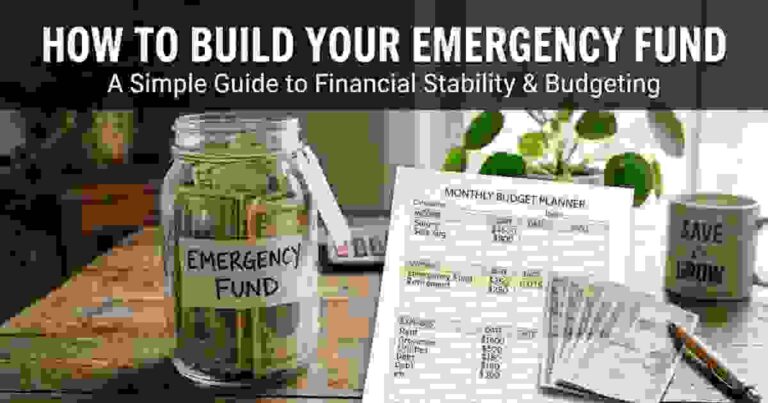
Start by checking your household budget and reviewing how much emergency savings you may need. These guides help distinguish money for near-term needs from money you can consider investing.
One of the biggest beginner mistakes is investing money that may be needed soon.
Stocks and other investments can fall in value, sometimes significantly. If an emergency forces you to sell during a downturn, a temporary market decline can turn into an actual loss.
Before investing heavily, consider four questions.
Do you have emergency savings?
Keep accessible savings for unexpected expenses such as medical bills, repairs or a loss of income.
The appropriate amount differs from person to person. The important point is that your investment portfolio should not be your emergency fund.
Do you have expensive debt?
Compare the interest you’re paying on debt with the uncertain return you might earn by investing.
Paying down high-interest credit-card or consumer debt may deserve priority before taking additional investment risk.
What are you investing for?
Your goal determines your strategy.
You might be investing for:
- Retirement
- A future home
- Your children’s education
- Financial independence
- Long-term wealth
- Another goal several years away
Write down the goal and approximately when you expect to need the money.
How long can the money remain invested?
Money needed within the next few years generally shouldn’t be exposed to the same level of stock-market risk as retirement savings that may remain invested for decades.
Investor.gov emphasizes goals, time horizon, asset allocation and diversification as core parts of an investment plan.
2. Choose the Right Investment Account
Before asking, “Which stock should I buy?” ask a more important question:
Which type of account should I use?
Workplace retirement account
If your employer offers a 401(k), 403(b) or similar retirement plan—particularly one with an employer match—it may be an important place to begin.
For 2026, the employee contribution limit for 401(k), 403(b) and most governmental 457 plans is $24,500.
Your personal target does not have to be the maximum. Starting with an amount you can comfortably maintain is more important than waiting until you can make a large contribution.
Individual Retirement Account
Traditional and Roth IRAs can provide another way to invest for retirement.
The IRA contribution limit for 2026 is $7,500, subject to applicable eligibility, income and tax rules.
Taxable brokerage account
A standard brokerage account provides more flexibility because the money isn’t specifically locked into a retirement account structure.
That can make it useful for long-term goals outside retirement, although it doesn’t provide all the tax advantages available through certain retirement accounts.
The correct account depends on your country, tax situation, employment benefits and financial goals.
3. Start With Diversification Instead of Trying to Find the Next Winning Stock
Buying one company’s stock might produce a spectacular return.
It can also produce a spectacular loss.
That is why diversification is one of the most important concepts a first-time investor can learn.
Diversification means spreading your money among different investments rather than depending on a single company, industry or asset.
FINRA notes that diversification can reduce concentration risk caused by placing too much money in one security or asset class.
Index funds
An index fund attempts to track a particular market index rather than relying on a manager to continually choose winning stocks.
A broad-market index fund may provide exposure to hundreds or even thousands of companies through a single investment.
Exchange-traded funds
ETFs can also provide diversified exposure to stocks, bonds or other assets and can be bought and sold through brokerage accounts.
Not every ETF is diversified or low-risk, however. Some focus on a particular sector, commodity or investment strategy, so beginners should understand what an ETF actually owns before buying it.
Target-date funds
A target-date fund combines different investments and gradually changes its asset allocation as its target retirement year approaches.
This can be useful for someone who prefers a more hands-off investment approach.
Robo-advisors
Robo-advisors can automatically build and manage diversified portfolios based on information about your goals and risk tolerance.
They can be useful for investors who want guidance without selecting every investment individually.
Current beginner-investing guides consistently highlight index funds, ETFs, target-date funds and automated investment services as accessible starting points.
4. Automate Your Investments
You don’t have to wait until you have thousands of dollars.
Modern brokerage platforms increasingly support small investments and fractional shares, making it possible for many people to begin with relatively modest amounts.
A powerful beginner strategy is simply to automate a fixed contribution.
For example:
- Invest on every payday
- Invest once per month
- Automatically reinvest distributions where appropriate
- Increase contributions as your income grows
This approach is commonly associated with dollar-cost averaging—investing predetermined amounts on a regular schedule instead of trying to guess the perfect day to enter the market.
Automation also removes one of investing’s biggest obstacles: emotion.
You don’t have to decide each month whether the market “looks safe.”
Your investment plan makes the decision for you.
5. Match Your Portfolio to Your Time Horizon and Risk
There is no universal portfolio that is appropriate for every first-time investor.
Someone investing for retirement 35 years from now is in a very different situation from someone planning to use the money five years from now.
The appropriate mix of stocks, bonds, cash and other investments depends partly on:
- Your age
- Your goal
- Your investment horizon
- Your financial circumstances
- Your ability to tolerate losses
- Your emotional response to market volatility
Stocks generally offer higher growth potential but greater price volatility.
Bonds can provide income and potentially reduce overall portfolio volatility, although bonds also carry risks.
Cash and cash-equivalent investments generally fluctuate less but may offer less long-term growth potential.
Diversification cannot eliminate investment risk, but FINRA notes that diversification and asset allocation are basic tools investors can use to help manage it.
6. Pay Attention to Investment Fees
A small percentage fee can look insignificant.
Over decades, it isn’t.
Possible costs include:
- Fund expense ratios
- Advisory fees
- Trading charges
- Account fees
- Foreign-exchange costs
- Withdrawal or transfer charges
- Tax costs
Compare the total cost of an investment rather than focusing only on its past performance.
Low-cost investing has become particularly relevant because consistently beating broad market benchmarks is difficult. For example, S&P Dow Jones Indices reported that 79% of active U.S. large-cap equity funds underperformed the S&P 500 in 2025.
That doesn’t mean every active investment is inappropriate. It does mean beginners should understand exactly what they’re paying for.
7. Avoid the Mistakes That Hurt New Investors
Learning what not to do can be just as valuable as learning what to buy.
Mistake: Waiting for the perfect market
Nobody consistently knows the perfect day to invest.
A long-term plan should not depend on correctly predicting every market high and low.
Mistake: Chasing whatever is trending
AI stocks, cryptocurrency, meme stocks and other popular investments can attract enormous attention.
Popularity does not automatically make an investment suitable for your goals.
Understand what you’re buying, why you’re buying it and how much you could lose.
Mistake: Putting too much into one investment
A portfolio dominated by a single company, sector or speculative asset exposes you to concentration risk.
Diversification is designed to reduce that dependency.
Mistake: Trading constantly
Investing and trading are not the same thing.
Long-term investing generally focuses on ownership, compounding and achieving financial goals rather than predicting short-term price movements.
Mistake: Ignoring fraud
Be suspicious of anyone promising guaranteed high returns, secret investment opportunities or profits without risk.
Investment returns are never guaranteed simply because someone online sounds confident.
Mistake: Panicking during market declines
Market downturns are uncomfortable.
Your investment strategy should account for the possibility of declines before they occur.
If normal market volatility would cause you to immediately sell everything, your portfolio may be taking more risk than you’re comfortable with.
A Simple First-Time Investor Action Plan
If you’re ready to begin, you don’t need a 100-page financial plan.
Start with these seven steps:
- Define one specific investment goal.
- Decide how long the money can remain invested.
- Keep adequate emergency savings outside your investment portfolio.
- Choose an appropriate retirement or brokerage account.
- Choose a diversified investment strategy you understand.
- Automate a contribution you can maintain consistently.
- Review your plan periodically rather than reacting to daily headlines.
As your knowledge, income and financial situation develop, your strategy can become more sophisticated.
It doesn’t have to start that way.
Frequently Asked Questions
How much money do I need to start investing?
There is no universal minimum. Some brokerage platforms and investment products allow people to begin with relatively small amounts, particularly where fractional shares are available.
The more important question is how much you can invest consistently without compromising essential expenses or emergency savings.
Is $100 enough to start investing?
Potentially, yes.
A small amount invested consistently can be more useful for developing good financial habits than postponing investing while waiting for a large lump sum.
Investment returns are not guaranteed, however, and the appropriate investment still depends on your goals and risk tolerance.
Should a beginner buy individual stocks or ETFs?
Individual stocks expose the investor to the performance of particular companies.
A diversified ETF may provide exposure to many securities at once.
For that reason, broad diversified funds are frequently used as the foundation of beginner portfolios, while individual stocks can involve additional company-specific risk.
Can I lose money investing?
Yes.
Stocks, bonds, ETFs, mutual funds and other investments can decline in value. No legitimate investment strategy can completely eliminate risk.
Understanding that possibility is an essential part of investing.
Should I wait for the market to fall before investing?
Trying to consistently predict short-term market movements is extremely difficult.
Investors with long-term goals commonly build a strategy around regular contributions and an appropriate asset allocation rather than attempting to identify the perfect entry point.
The Bottom Line
Successful investing doesn’t have to begin with finding the next enormous stock winner.
For a first-time investor, the more important principles are usually simpler:
Start with a goal. Keep emergency money separate. Diversify. Keep costs under control. Invest consistently. Understand your risk. Give your strategy time.
Your first portfolio doesn’t have to be perfect.
It needs to be understandable, affordable and appropriate for the future you’re trying to build.
One Comment